
In the exquisite documentary film Wilding, Isabella Tree and Charlie Burrell recount the time they shared their visionary project – allowing nature to reclaim and heal their depleted farmland at Knepp estate in West Sussex – with other local farmers. They had hoped to win their audience over with exciting stories of the soil being naturally restored, native plants and wildlife returning, and allowing wild ponies, cows and pigs to roam, trample and rootle. They were met instead with anger and outrage. Their farming community was appalled that they would turn farmland over to nature when people needed to be fed, crops needed to be grown. But the farmers were most offended, Isabella recalls, by all the ragwort.
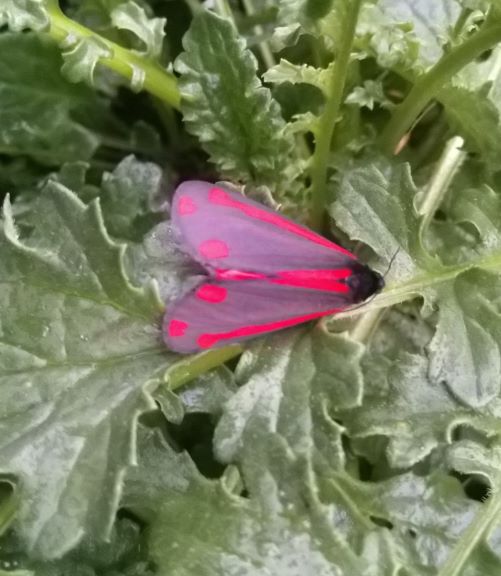
As I’ve written about before, ragwort (Senecio jacobaea) is a native UK wildflower which is the foodplant of the cinnabar moth caterpillar (Tyria jacobaeae). Without ragwort, this striking orange and black striped caterpillar, and its eye-catching black and red adult form, would not survive. But the plant can be toxic to horses when mixed with hay, so is often heavily controlled using herbicides. However, a balanced approach can ensure that we make room for this important native plant.
Watching Wilding this week, I couldn’t help but be envious of the gloriously abundant ragwort in Isabella and Charlie’s meadows. My garden is on a nanoscale compared to their 3,500 acres but nature thrives here too, given the tiniest opportunity. Ever since I first saw cinnabar caterpillars on ragwort in my garden, I’ve looked out eagerly for both every year.
Ragwort seems to have alternately good and bad years. Last year was a good one for our ragwort, although the cinnabars responded by overpopulating, and nature’s harshness played out visibly, here in my back garden.
This year was a bad one, though. The moths appeared in May and they seemed lost and lonely. I found solitary moths wilting or waiting on the damp grass, or I gently removed them from inside the house. One sadly drowned in a bird bath. This hasn’t happened before. I think they didn’t know where to go after emerging from their cocoons, when they couldn’t find their usual meeting place for mating and laying eggs – so they wandered or simply waited.

Just two ragwort plants grew in the end, one in a pot in the back garden and one at the front. They were crawling with baby caterpillars by mid-June (some of the moths had found their partners and their baby food after all, of course they had) and the plants became smothered with plump orange and black bodies as the babies grew.
There were too many, but unlike last year I decided not to relocate them. This is partly because there is not much ragwort nearby to relocate them to, but mostly because I have no idea whether my efforts really helped them at all last year. I wanted to take a different approach, trusting that their numbers will rise and fall and rise again in response to their environment, whatever I do or don’t do. I tried to get past the dark feelings which I know, year on year, I increasingly project onto this scene, onto these beings: grief, guilt, and at times despair at the worsening nature crisis, and with our broken relationship with the natural world which is all around us and within us. I wanted to simply enjoy the beauty of these creatures and to embrace their delicate cycles of life, death and survival. I wanted to just be happy that they are here.
A couple of miles from my home, near the river, there are dozens of ragwort plants. I’ve been happy to spot plump cinnabar caterpillars on their leaves and flowers while jogging past. At home, the plants are reduced to stumps, and the last caterpillars standing have wriggled off to begin the next stage of their incredible life story.

Find out more:
- Learn more about cinnabar moths from Buglife
- Take part in the Big Butterfly Count 2024, happening now! From 12 July to 4 August, record your sightings of butterflies as well as day-flying moths like cinnabars.
 small world
wow!! 104From envy to joy via despair: strong feelings about caterpillars (and ragwort)
LikeLike