
We’ve all seen the headlines: bees are amazing, they are essential to our survival, and they are in trouble. Bees are often in the news, and from the dominance of stories about the plight of honeybees, you’d be forgiven for thinking that they are the priority for bee conservation. But while these fascinating, communal insects have a vital role to play, there are dozens of other bee species away from the headlines who need our attention. Unlike honeybees, most of them don’t make honey and most of them prefer a solitary life – but they are essential to a healthy ecosystem, and there are some simple ways we can help them.
Follow the honey
A few years ago I spent some time finding out about natural beekeeping. I’d heard about some of the problems with commercial beekeeping, where concentrations of managed bee hives can mean honeybees out-compete native wild bees for nectar, and can lead to the spread of parasites among bees, which may then spread to wild bees too. And because the industry wants to harvest as much of the bees’ honey as possible for people, the bees’ natural behaviour is discouraged – sometimes violently, like by clipping the wings of the queen to stop her swarming (this is when the old queen leaves the hive along with part of the colony, leaving a new queen to take over). Plus, it just doesn’t seem very kind to take as much as possible from them. Honeybees work incredibly hard to make the perfect food to nourish their colony through the winter and we steal it away to spread on our toast, giving them cheap sugar to eat instead.
But unlike other animals who are unfortunate enough to be farmed by humans, I thought, we do need bees. These busy little pollinators are critical for a huge proportion of the food we eat, so we really don’t want them to disappear. So I was drawn to natural, or bee-centred, beekeeping, which aims to support honeybees to live naturally and thrive – with minimal feeding, treatment or other interference. I did a couple of courses, read some books, even assembled a top-bar hive – a design which enables you to observe and support the bees with less disturbance.

I didn’t end up with a bee colony to care for, in the end, but it was a fascinating learning experience leaving me with enormous respect for honeybees and the sophisticated, complex and mysterious ways they organise and communicate.
It’s a buzzkill
I’m now finding out about some of the other bee species around us, and I’ve realised that I wasn’t seeing the big picture. Honeybees are not considered threatened, unlike 45% of Europe’s bumblebee species, who also play a significant role in pollination. And while small-scale beekeeping is a great way to learn about bees and support these pollinators, honeybees are just one of 267 species of bee in the UK. 90% of them are solitary bees and are also excellent pollinators.
I’ve been learning more about our wild bees and how we can help them in a fascinating course on Bee Nesting Ecology and Conservation with the Field Studies Council. I’ve learned that a third of our native bee species are in decline and the future looks very bad if this trend continues. They are threatened from all sides by habitat loss, pesticides, climate change and spread of disease and parasites. But there are some great projects trying to help wild bees recover. Conservationists are giving the rare Shrill Carder Bee (Bombus sylvarum) a helping hand, for example, by working with farmers to restore wildflower and grassland which the bee depends on.
Flower power
Restoring bees’ natural habitat is critical. We’ve lost an unbelievable 97% of our wildflower meadows since the 1930s. This is something we can all help with, whether you have a field or a windowbox. If you have a grassy garden, taking a lazier approach to gardening will help. Mow less, relax more: that’s my kind of gardening. Scatter some wildflower seeds, and let your garden grow wilder. A variety of different wildflower species will help support a more diverse bee population, as some bees are not so fussy and will visit a range of different flowers, whereas other bees are more specialist feeders.
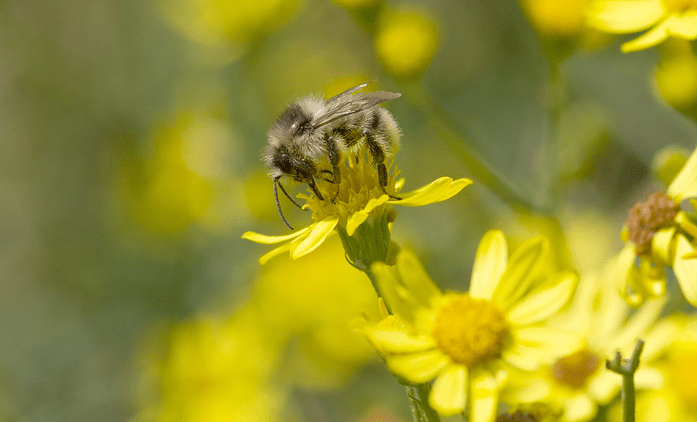
We’ve let red valerian take over our gravelled front garden which the bees and butterflies love. And in the back garden we let the grass grow long. Dandelions flourish in spring, providing early pollen and nectar for bees. I spotted this Tree bumblebee (Bombus hypnorum) in May this year (and even wrote a poem about our dandelion-filled lawn in celebration of #NoMowMay). Other nectar-rich plants like ragwort and knapweed flower in summer.

Air Bee & Bee
We can also help by providing nesting habitats for bees. Honeybees and bumblebees live in colonies, but what about solitary bees? Understanding the different nesting habits of solitary bees helps in designing and providing artificial nest sites for them. You’ve probably seen ‘bee hotels’ which are made from hollow bamboo canes, or by drilling holes in a block of wood. This is a simple way to provide nesting habitats for cavity-nesting bees or ‘renters’, a whole range of species who like to raise their babies in pre-existing holes, and gives you an exciting opportunity to watch them at work. The very first year we added a small bee hotel to our garden we saw that some of the entrances were plugged with leaf fragments. I now know that these nests are built by leafcutter bees, who construct cylindrical protective casings within their nests for their larvae to grow inside.
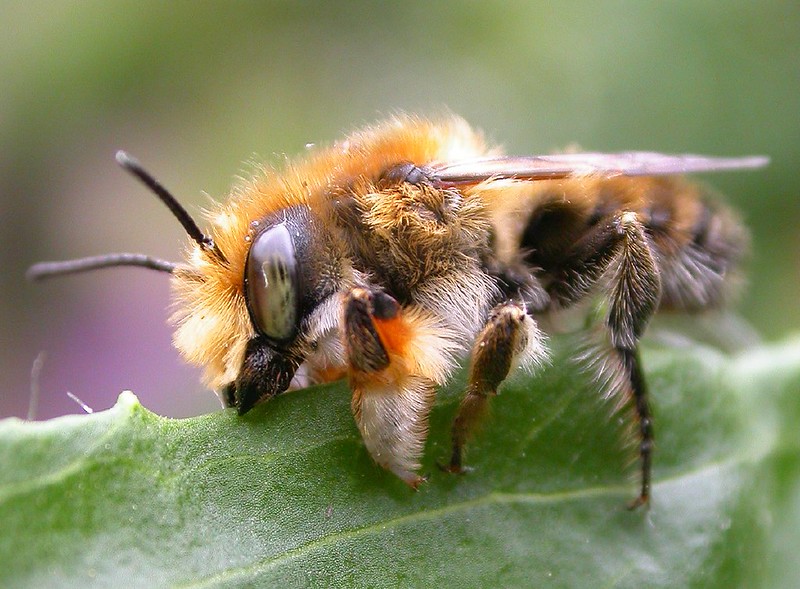

Many solitary species make their nests by digging into bare ground, like the distinctive Ashy mining bee (Andrena cineraria). The depth and structure of the nest varies depending on the species and the type of soil, but often a bee will excavate a vertical tunnel around 10cm deep, and add several lateral tunnels leading to brood cells. So simply by providing some bare soil, close to wildflowers for the bees to forage on, you can help create more nesting sites for solitary bees to raise their young.

What bees have you seen? Here’s a handy guide to identifying solitary bees.
Find out more
- Courses on bees and other pollinators with the Field Studies Council
- Excellent resources from the Bumblebee Conservation Trust
- Bee The Change is a non-profit organisation in Bristol aiming to support pollinators through community projects and education
- Watch this webinar from the Field Studies Council on solitary bee identification and nesting ecology with Aaron Bhambra
 small world
Great blog. It’s all to common for people to associate saving the bees with the honeybee, with well-intentioned actions then adding to the issues our wild bees face. This feee virtual talk coming up next year looks at what’s happening in London… https://www.eventbrite.co.uk/e/the-london-bee-situation-how-sustainable-is-beekeeping-in-london-tickets-334830806957
LikeLiked by 2 people
Thanks Kieron! I’ll share this around. The whole series of talks looks really interesting.
LikeLike