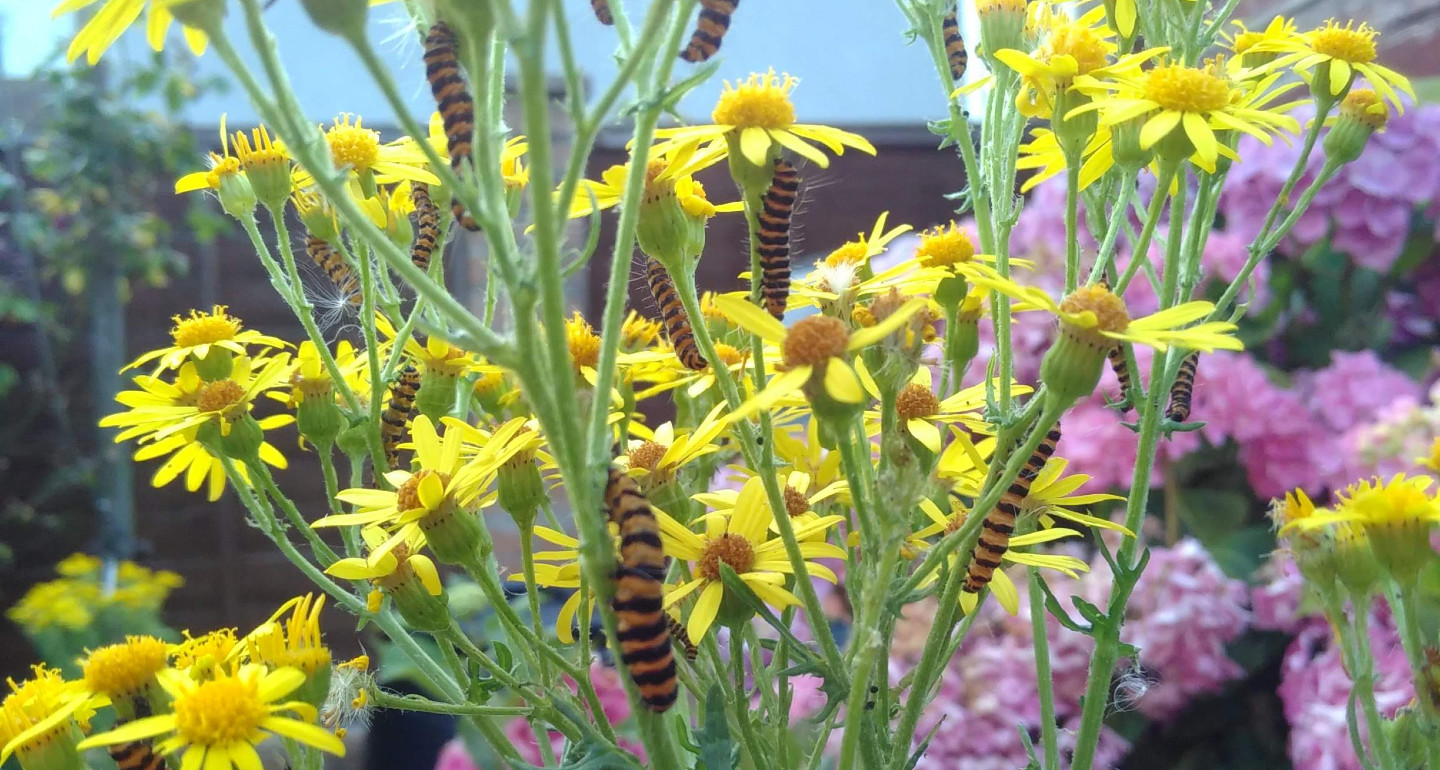
It’s a highlight of my summer. In early to mid-July, the first little orange-and-black striped caterpillars appear and start munching through the ragwort which flourishes in our back garden. They start off tiny but they are constantly eating, growing fatter by the hour until their bright orange stripes are easy to spot among the jagged green leaves and yellow flowers of their favourite plant.
In the past four years since we moved into our house and found ourselves the guardians of their back garden habitat, I have become more than a little obsessed with ensuring the annual wellbeing and survival of these caterpillars. I have forbidden any ragwort to be mown or pulled up. I water the ragwort as lovingly as I do our fruit bushes and herbs (more so, in fact, as I have to be extra careful not to wash off the resident caterpillars). If I find a caterpillar on the grass or concrete I will often move it onto a ragwort leaf – hoping that it wasn’t, in fact, done with eating and now purposefully making its way off to snuggle down in a cocoon somewhere.
I’ve come to expect the usual ragwort forest which takes over half the garden each summer, but this year I’ve been puzzled to see far fewer of these plants. Is it a bad year for ragwort? Are cinnabars everywhere struggling to find food? I need to investigate, to help me try and revive our little ragwort jungle next summer.
Make space for stinking willy
We leave some parts of our garden largely untouched, and unmowed, to let wildlife carry on as it likes. Ragwort has thrived, and now that we know these little moth babies rely on it, we make sure to leave it alone. Common ragwort (Senecio jacobaea) is important not just for cinnabars but for many other pollinators, and has a number of different common names including tansy ragwort, benweed and stinking willy.
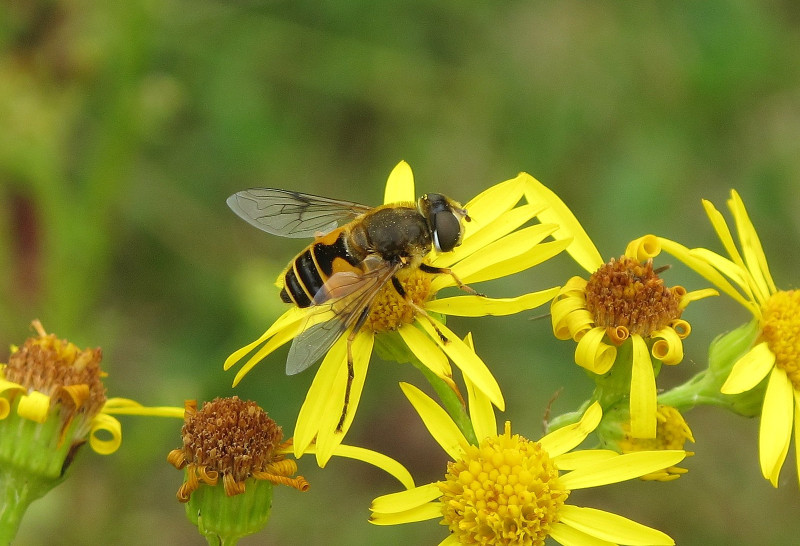
This nectar-rich plant has a bad press though. It is toxic to horses, having evolved toxicity as a defence against being eaten by grazing animals, so it is often pulled up on farmland. If you do an internet search for ragwort (just like if you try and find out about slugs, or wasps) many of the results are warnings and instructions for getting rid of it. But a bit of ragwort in your garden, park or along verges is not going to cause a problem. A person would have to consume an enormous amount to be at risk, and it’s pretty unlikely that a human would eat any at all. So leave a little to grow, and you’ll be rewarded with the most stunning caterpillars and moths.
It’s not doing so well in our garden this year though. A patch of grass where usually a dozen or more ragwort plants grow good and tall over the summer has this year supported just a couple of small plants. I’m wondering if we let the grass get too long here and the ragwort couldn’t compete this year.
I’ve also recently discovered that ragwort is a biennial plant. This means it has a two year life cycle, flowering in its second year. Is this why last year we had so much of it, and this year much less? Maybe the younger plants from last year just haven’t grown so well because of the colder weather and the longer grass. We’re planning to mulch down this grassy patch over the coming winter (using a no-dig method called ‘lasagne mulching’), so that we can devote a bigger area to wildflowers. It might help if we collect seeds from this year’s flowering ragwort plants and sow these in the new bed next spring.
I’ve been worried about our back garden caterpillar population, but in these summer months I see plenty of ragwort on verges or unmown park areas when out walking. I smile when I peer in closer and see the clusters of caterpillars busily chewing away. I remember that I am not solely responsible for the survival of the cinnabar species, that our small urban garden is not their only habitat, and I relax a little. They know where to go, and they seem to be doing fine out there.
You know that you’re toxic
From around May their mothers start to flit around the garden looking for young ragwort plants to lay their eggs on. I often disturb one of these beauties as I walk through the grass. A sudden fluttering flash of red stops me in my tracks as I watch and wait for the moth to settle again.
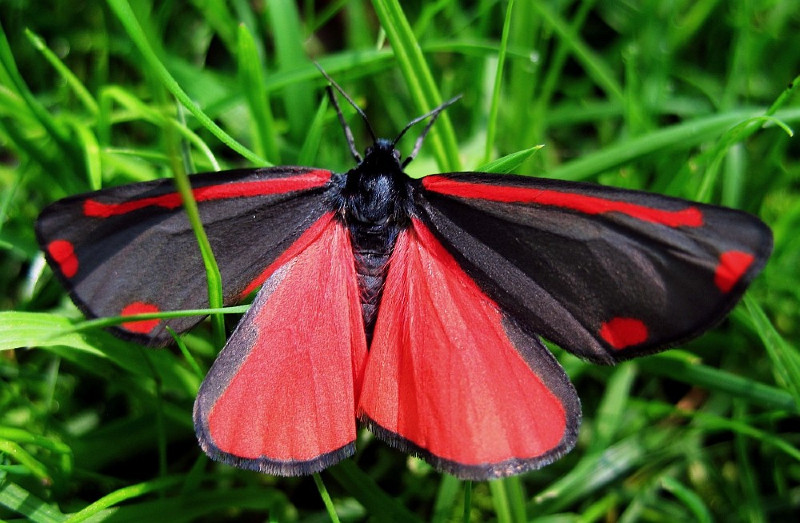
The moth’s hindwings are bright red, and its forewings are black with red markings. It is a very striking moth which often flies during the day. The cinnabar moth (Tyria jacobaeae) is named after the bright red mercury ore cinnabar, which has been used as a pigment and in jewellery. Interestingly, like its moth namesake, the cinnabar mineral is toxic – so it’s not often used to decorate humans any more.
The female lays her eggs on the underside of the ragwort leaves, so when her babies hatch out they can start eating their favourite food straight away. A few caterpillars will devour all the leaves and flowers on a plant pretty quickly, leaving just a bare stem.

As they grow and move around they are easy to spot. It might seem risky to be so conspicuous, but as they ingest the poison from the ragwort they taste revolting to any birds who try to eat them, and their bright colour serves as a warning to put most off trying. This does seem to be a pretty successful strategy as there are still plenty of caterpillars hanging around in our garden towards the end of the summer.
Going underground
Around this time of year, the fat caterpillars start to move off. I’ve seen them abandoning the decimated ragwort stems and making a break for cover, wriggling along the concrete towards the safety of a hedge or flower bed. I assumed they would be bedding down in a cocoon somewhere, but until this year I didn’t really know where they went, or what they looked like in this next phase of their intriguing lifecycle. Then while digging for worms with my two year old in the spring, we unearthed a few small, reddish-brown cocoons in the soil, and realised it must be the dormant cinnabars. We’ve carefully covered these treasures back over with shallow soil and left them in peace.
The caterpillars spin their cocoons and remain underground over the winter and spring, making a fabulous, magical entrance back into the world as an adult moth in May and starting the whole beautiful cycle again.

Since enjoying everyone’s favourite celebration of gluttony and metamorphosis The Hungry Caterpillar as a child, the extraordinary lifecycle of moths and butterflies has only become more incredible to me, and the particular story of the toxic cinnabar moth and the ragwort is the stuff of fairytales. It’s amazing to see this magic unfold each year in our back garden in Bristol, and I hope next year we can support even more of these cleverly foul-tasting, stripy marvels to thrive and transform.

cinnabar caterpillar by Johnson Cameraface is licensed under CC BY-NC-SA 2.0
Find out more
- For more information about the risks from ragwort, and the need for a balanced approach which maintains this important native plant in our countryside while protecting horses, read these leaflets from Buglife and Butterfly Conservation & British Horse Society.
Why should we protect moths?
- Britain’s moths are in serious decline, particularly in southern Britain. Their numbers decreased overall by 40% between 1968 and 2007
- There are 2,500 species of moths in Britain – they are a substantial part of Britain’s biodiversity
- Moths are an important food source for birds, bats and mammals
- Moths benefit plants, and humans, by pollinating flowers and food crops
- Moths are widely spread so are a good indicator species, telling us a lot about the health of our environment
- Their decline shows there has been widespread degradation of our environment and habitat loss due to human impacts including intensive agriculture, changing woodland management and urbanisation
- Monitoring their numbers can give us vital clues to changes in our own environment, like the impact of new farming practices, pesticides, air pollution and climate change
How can you help moths?
- Plant pollinator-friendly plants in your garden
- Don’t trim your hedges or mow your lawn too often
- Avoid using pesticides
- Join the National Moth Recording Scheme
- Help slow down climate change: reduce your carbon footprint
 small world
Lovely blog and great photos ! 😊
LikeLike