I peered into the circular hole in the door of my garden shed, past the radial silk strands which stretched out from it across the peeling wood paint. A little way inside I could see a collection of inky black legs pointing in my direction. It was impossible to tell how big the creature was, as most of the body was hidden in the darkness beyond. But the legs did look unusually long, for a garden spider.
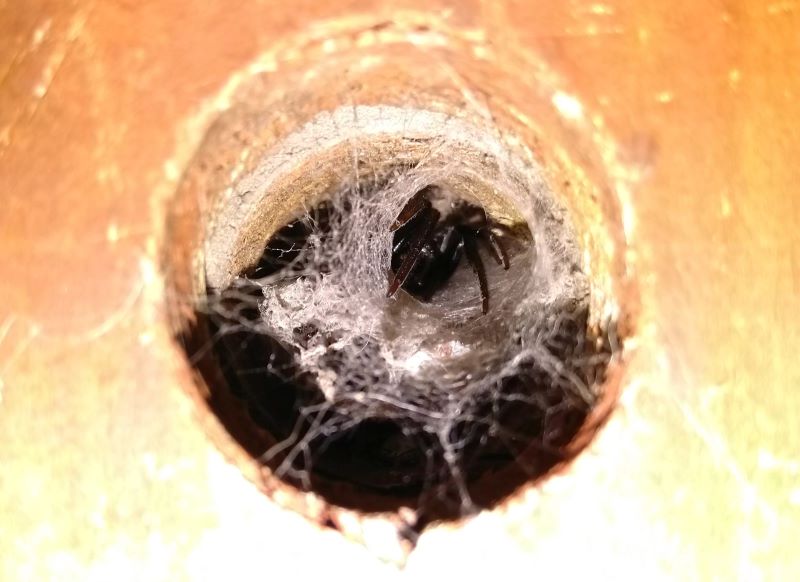
I’d been searching for interesting spiders to photograph and share as part of an online course with the Field Studies Council, last spring. I snapped this one, or what I could see of it, and my tutor suggested from the photo that the spider in my shed door was probably a Green-fanged tube web spider (Segestria florentina), a large and formidable species which we are lucky to have plenty of in Bristol. They’re not so common further north in Britain.
The spider, as its name suggests, has metallic green chelicerae (mouthparts), and the radial strands at the entrance to her tube-shaped web alert her to passing prey. I am told that an electric toothbrush held against the threads can bring the spider leaping out to try and catch whatever is buzzing on her silken tripwires. I haven’t tried that. But take a look at this video from someone who helped an injured Segestria florentina after she’d lost a couple of legs. The video gives you a great view of the spider’s impressive fangs!

Web sweet web
The Green-fanged tube web spider is one of around 670 species of spider in Britain (280 or so of these are very small spiders known as money spiders). In a fascinating recent webinar from the Tanyptera Trust, arachnologist Richard Gallon went through the main families of larger spiders you can find in Britain, and showed that we have a huge variety of species.
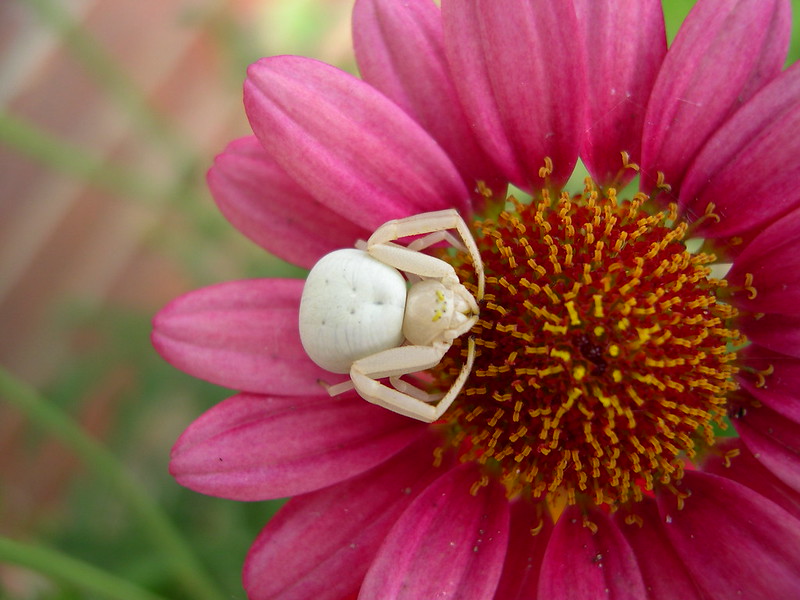
“white crab spider (Misumena vatia) on a flower” by mwcarruthers is licensed under CC BY 2.0.
One of the biggest families is Arenidae, the orb web spiders, distinctive for the large webs they build. It was one of these, a Cross orbweaver (Araneus diadematus), who set up home in our kitchen last year and became a welcome and entertaining lodger.
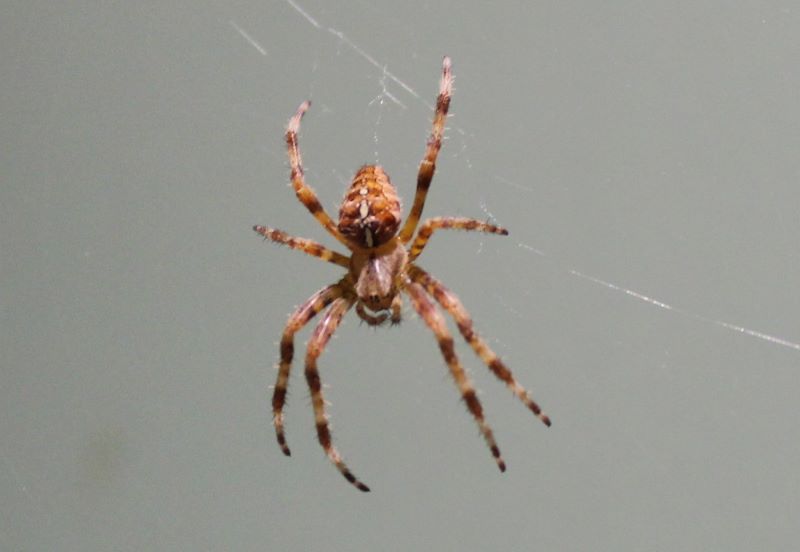
She made her web in a number of different places around the kitchen, some more successful and enduring than others. Up high in the corner of the ceiling, or above the cooker hood, were better spots than between the dirty cups by the draining board.
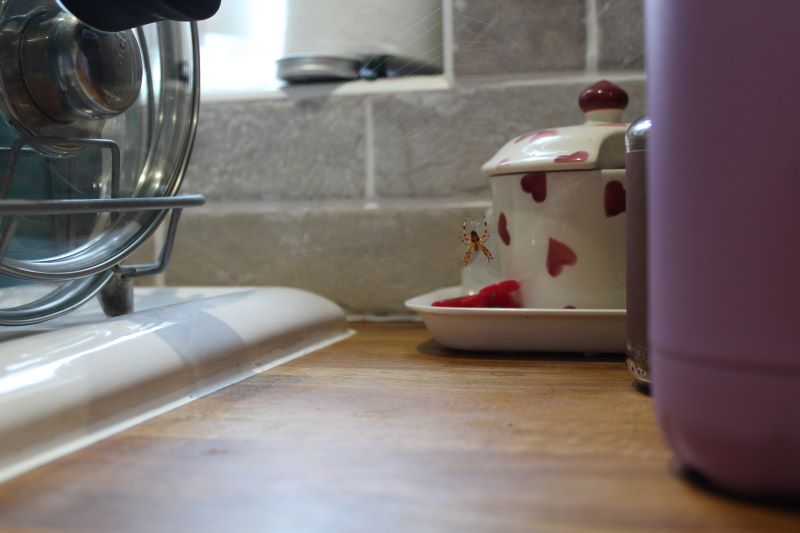
More than once we thought the orbweaver had moved on only to find her a couple of days later sitting in the centre of a glorious brand new web. One week we had watched the spider carefully spin a web in the corner of the kitchen window, a web which lasted well over a week, and we appreciated the skill and effort this involved. So we did our best, after discovering her new spot one morning, to go about our day avoiding the threads stretching between our food waste caddy and the kitchen worktop.
One day I thought I’d found our spider friend curled up lifeless on the windowsill behind the kitchen sink, but on closer inspection I realised I was looking at her exoskeleton. Spiders, like all arthropods, need to shed their hard exoskeleton to grow, and go through several moults as they keep growing.

Cross orbweavers are also known as ‘garden spiders’ as they are so commonly found in gardens, so I felt privileged that this one had decided to settle inside our home. She lived in our kitchen for months, over the autumn and winter, and it was a sad day when I finally found her curled up lifeless (for real, this time) on the kitchen worktop beneath her final, beautiful web.
Amazing arachnids
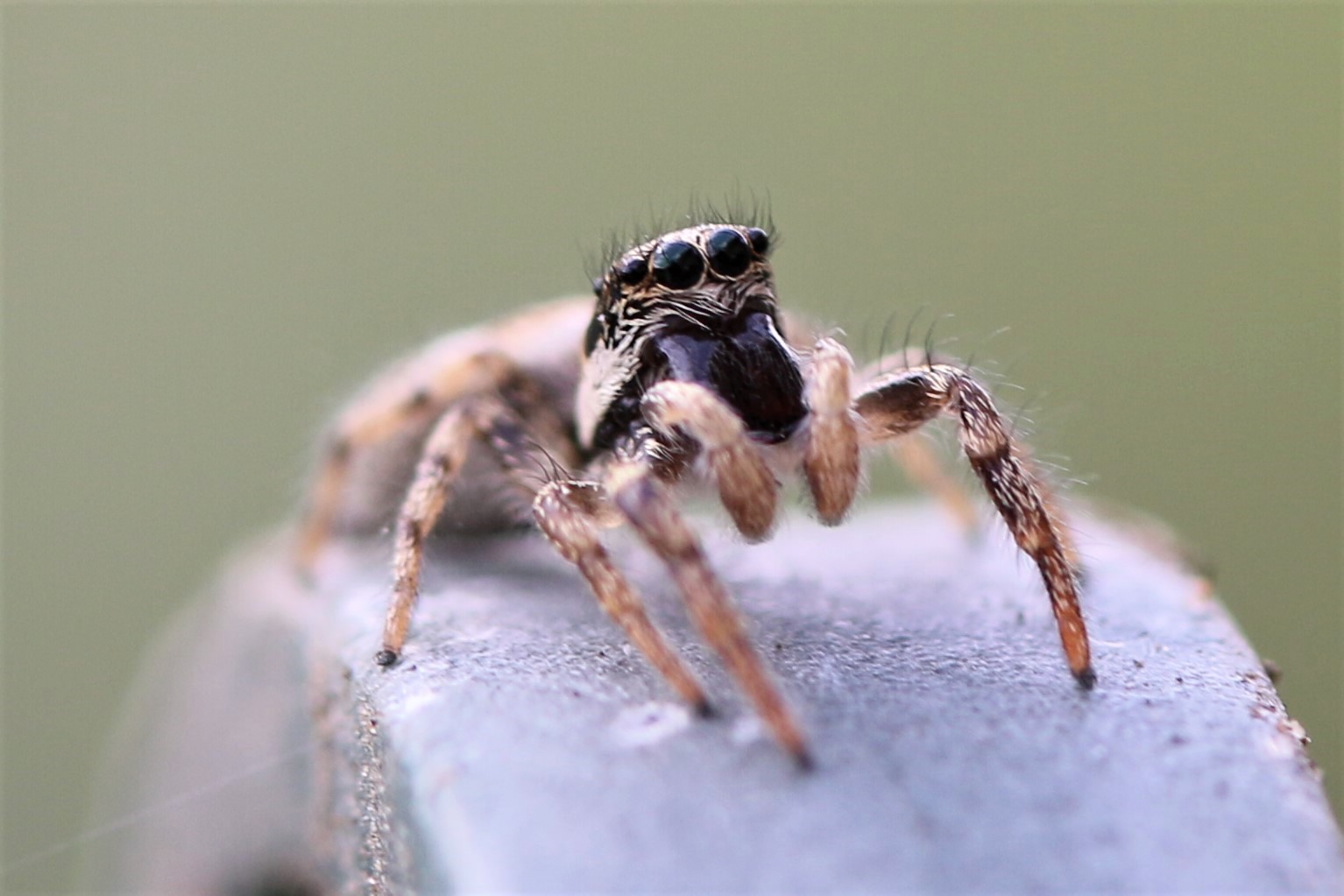
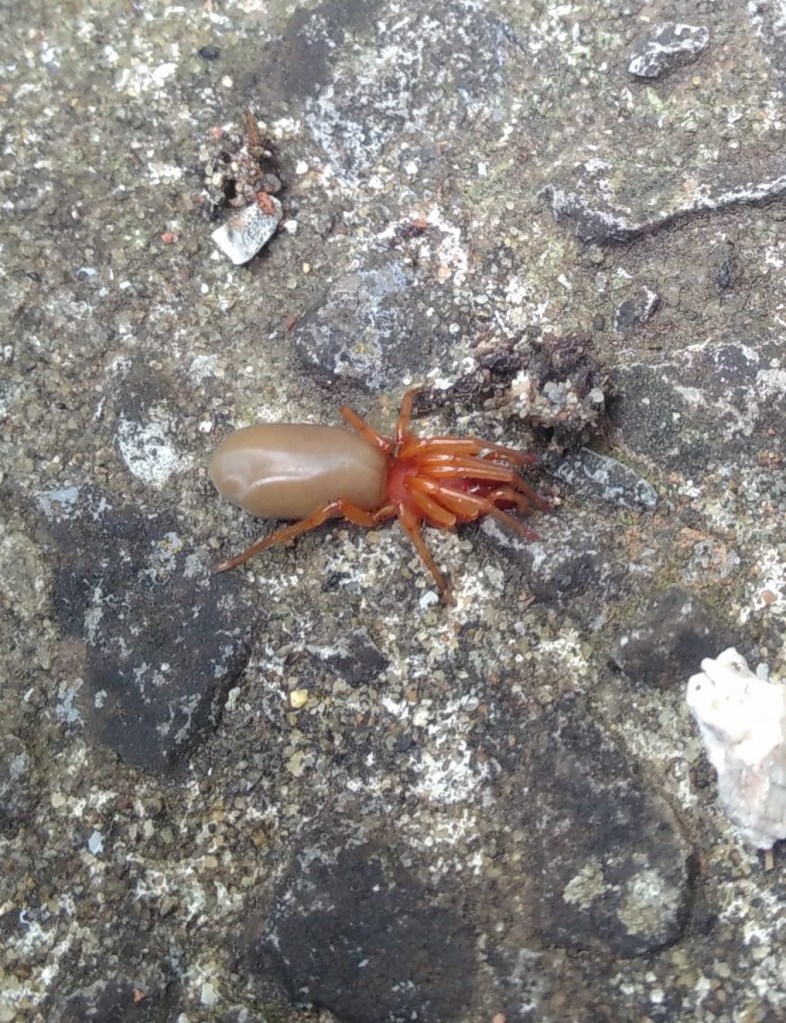
I’ve spotted a surprising number of different spider species in our garden and home over the past year, including: the diminutive zebra jumping spiders living in the warmth of our porch (I haven’t yet managed to get a photo of these fast little arachnids); the noble false widows in the dark of the garden shed; the fearsome woodlouse spiders lurking under plant pots in wait for tasty woodlice; the wolf spider lovingly carrying her egg sac behind her, beneath the shadow of a garden drainpipe; and the giant house spiders in the bath!


Join the spider fanclub
You can find out a little more about some of the spider species you might find in your garden or home, in the first edition of the Bristol Spider Web, a newsletter from the newly formed Bristol Spider Group! We’re a small group of amateur spider enthusiasts hoping to find out more about the spiders of Bristol. We’d love to hear from anyone in Bristol with spider photos, sightings or stories to share. You can get in touch either via the email address in the newsletter, or my contact page.

I’d love to be able to take more detailed photos of these wonderful arachnids. I follow a number of very talented photographers on social media, like Tim Jonas who takes the most incredible close-up photos of spiders.
In a pickle
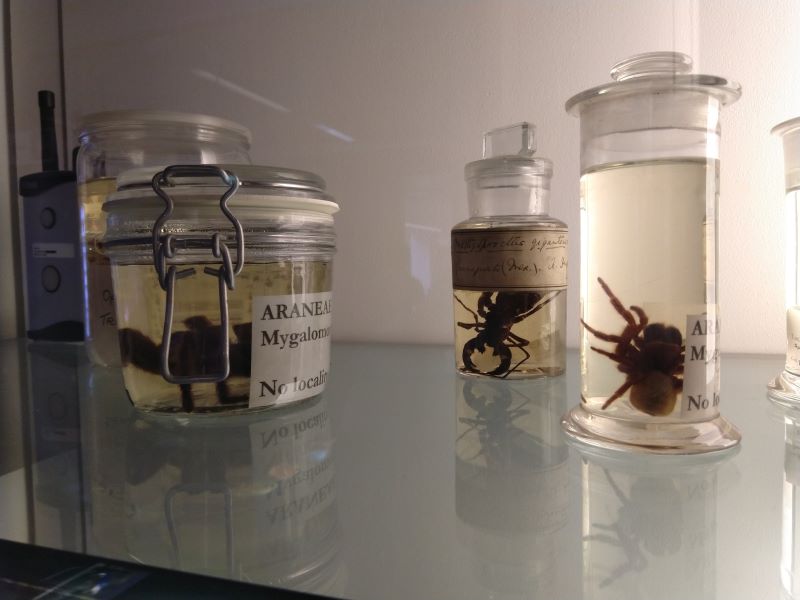
I’m also intrigued by how spider species have been discovered and documented over the years. I know this involves a lot of collecting and pickling, which is a sad end for a few individuals but important for scientific records. On a visit to the Natural History Museum recently, it was fascinating to see just a fraction of the collection of invertebrates in their collection, including these spiders. I learned that having specimens like this is extremely valuable for scientists and conservationists, for example in comparing which species have been found where, over time.
Learn more
- The British Arachnological Society uses science and education to advance the wider understanding and appreciation of Britain’s arachnids (spiders, harvestmen and pseudoscorpions) and to promote their conservation.
- Bristol Spider Web, issue #1, Summer 2023: read the first newsletter from the Bristol Spider Group
- Watch: Recognising British Spider Families, a presentation by Richard Gallon and the Tanyptera Trust:
 small world