
I was walking along a street near my home on a wet May morning. Rain hit the pavement and car tyres splashed along the busy road beside me. I stopped as I saw in front of me a very large, pale earthworm moving quickly across the pavement, making a wormline for the kerb.
Its motion was captivating: muscular movement propelled its long body forwards, stretching and contracting. It was on a mission, but it was only going to end one way, so I scooped up the worm carefully in my hands. Immediately it shrunk to a third of its size, fitting into my palm. If I had been a seagull, maybe this trick would have surprised me into dropping my quarry. But, sensing this was not going to win it back its freedom, the long pinkish-grey body extended again and began to propel itself up my arm. I leaned over a garden wall and dropped the worm lightly onto what I hoped was a more inviting patch of ground, some delicious damp soil.
I know I’m not the only one who’s rescued countless worms stranded on pavements after rain. Have you ever wondered: why would an earthworm leave the security of a mulchy garden to risk life on an inhospitable pavement?
I didn’t get a photo, but estimate the intrepid worm was a good 20cm long. Now that I know a bit more about earthworms, I think it may have been a particularly large example of a shallow-burrowing earthworm, Octolasion cyaneum. These worms are pale in colour and sometimes emerge during rain.

We all know earthworms are good for the soil, but there is a great deal more to love about these wriggly garden helpers, as I’ve been finding out through an excellent course run by the Field Studies Council and the Earthworm Society of Britain.
So, here are my top ten wonderful ways of worms:
1. Earthworms hibernate
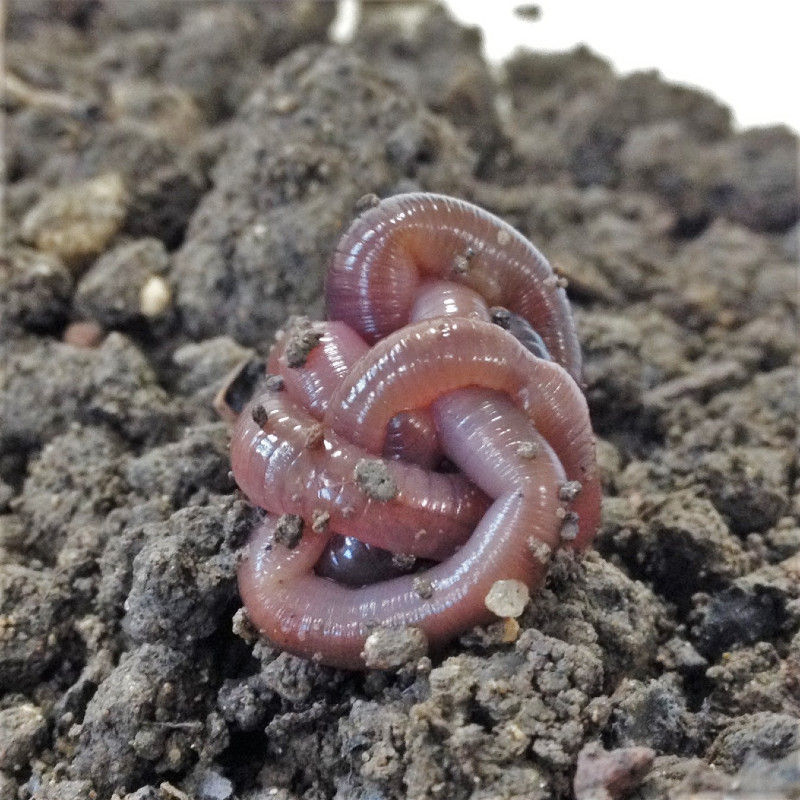
Earthworms love wetness, and if it gets too dry or hot that can be a problem. But they have a special trick known as ‘diapause’. If conditions become difficult, an earthworm can retreat deep into the soil, slow its metabolism right down, enter a dormant state and wait it out until conditions improve. In summer this is called aestivation (in winter, the more familiar hibernation).
The worm rolls into a ball, sometimes tying itself into a knot! It can stay like this for a long time until it’s safe to emerge again.
2. Giant earthworms are really, really giant
How long do you reckon the longest worm is? Not the largest ever specimen, but the typical length of the biggest known species. A foot, maybe two feet?
Nowhere close.
Found in Australia, the Giant Gippsland earthworm (Megascolides australis) often grows to two metres in length. That’s the length of a tall, fully grown human! Here’s David Attenborough meeting a giant earthworm for BBC’s brilliant Life in the Undergrowth series.
3. Don’t meet the family
Earthworms are annelids, or segmented worms. Our back garden earthworms – and even giant Australian earthworms – are harmless and beneficial, but that can’t be said for some of their cousins.
Earthworms are related to the appallingly named Bobbit worm (after the abused woman who took revenge on her husband). Also known as the sand striker (Eunice aphroditois), this ambush predator lies buried in the ocean floor, its long body sometimes reaching three metres. The worm snatches fish and other sea creatures in its jaws, dragging them underground like Jabba the Hutt’s favourite sand monster, the Sarlacc.

Also in the family is the lugworm, responsible for those curly poos you see on beaches by the shoreline (worm poos are known as casts – more on that later); and the medicinal leech which can grow to 20cm and is a protected species in the UK.
4. Earthworms can lose their tails
Firstly though, which end is the tail? The head is usually pointier, and has a mouth.

But earthworms can point their tails too, they can move backwards, and the mouth is covered by a fleshy lobe making it difficult to see. So, look for the thicker band on their body known as the saddle or clitellum. Adult earthworms, at least, have this saddle which is always closer to the head end.
That old story about cutting a worm in two? It’s not really true I’m afraid. It a worm loses its tail it might be able to regenerate, particularly if it keeps its clitellum. It probably won’t though, so take care with that spade.

But some species can drop their tail if threatened, like some lizards do, leaving a predator gawping at a wriggling tail while the clever end is off back to the safety of its burrow. This excellent skill is called autotomy.
On a grislier note, some longer worms can sadly fall apart if they are picked up – not as a defensive response but simply because they are delicate and designed to be supported by the earth. So, please support an earthworm along the length of its body if you pick one up. Don’t pick it up by the head or tail and leave it dangling.
5. Earthworms have different tastes
There are 31 species of earthworm in the UK, with our biggest being the lobworm (Lumbricus terrestris) which can live for ten years out in the wild. It can be tricky to identify an individual species, but I was pleased to learn that we can also separate our UK earthworms into four broad ecological categories depending on where they tend to live and what they like to eat. You can identify these differences just by looking at the worms in your local park or garden. These categories don’t correspond to taxonomic classification, but offer a simpler and more practical way of grouping and studying different earthworms.
| Ecological category | Size and appearance | What they eat | Where they live | Interesting behaviour |
|---|---|---|---|---|
| ANECIC (deep burrowing) | Large, 15cm+ Dark purple or red, becoming paler towards the tail | Soil, decaying leaves | Permanent, vertical burrow systems (can be 1m or more) | Emerge from burrows at night to feed (or to be eaten by badgers if unlucky) |
| ENDOGEIC (shallow burrowing) | Variable size, but often medium-large Pale pink or grey | Soil, dead roots | Within soil, usually within 8cm of surface | Spend lives within the soil, but can surface during rain and become stranded on pavements |
| EPIGEIC (surface dwelling) | Small Red/brown | Leaves, wood, dung | Leaf litter, under logs or bark | One species is found in trees |
| COMPOSTING | Medium-large Deep red and stripey | Rotting material rich in organic matter | Often found in household compost | Cocoons may remain dormant and hatch when conditions are good |
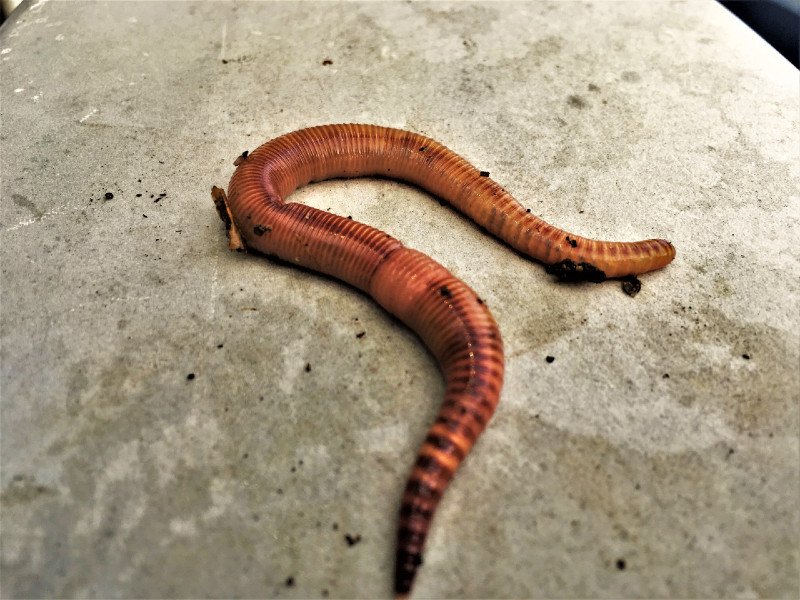
I spent a happy afternoon completing the field assignments for the Discovering Earthworms course, in my garden. This involved checking different habitats for worms, and digging a soil pit to count how many worms of different species there were. My two year-old joined in too. Digging for worms is pretty much his favourite thing to do ever, so this was right up his street.
This is a really interesting and simple activity which will help you get to know where different worms like to hang out in your garden or park. We found epigeic (surface-dwelling) worms in a pile of garden waste, and under a stone we found endogeic (shallow-burrowing) worms. But our favourite assignment was digging the soil pit and counting all the worms we found. We found twelve worms in a roughly 25 x 25 x 25 cm soil pit, mostly endogeic worms but there were a few juvenile anecic (deep-burrowing) worms too. You can tell they are juveniles because they don’t have the saddle yet.

Digging a soil pit 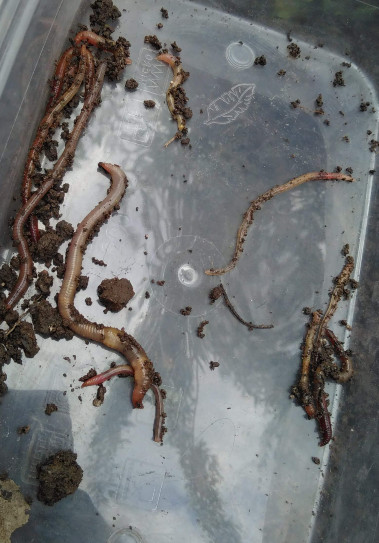
Earthworms found in soil pit (anecic and endogeic) 
Endogeic worms found under rock
6. Earthworms can reverse
It’s strangely hypnotic watching an earthworm move. A worm has different types of muscles: some encircle its body, and others run along its length. These muscles contract in turn enabling the worm’s front to move forwards first while its back end is anchored in place with extended bristles. These bristles are then withdrawn so the tail end can move forwards too. An earthworm can also do this in the opposite direction, moving backwards.
Don’t grab an earthworm peeking out of its burrow as it is likely to be anchored in at the tail end. If you pull too hard it might leave one end in the earth and you’ll end up with a sad half-worm in your hand.
7. They have permanent homes, with doorways
This honestly never occurred to me before. I assumed earthworms pootled around in the soil, going where the journey took them, with no fixed abode. But it turns out that deep burrowing (anecic) earthworms have permanent burrows, maintain their walls and even cover the entrances with piles of leaves, twigs and casts to conceal their home from predators. These entrances are called ‘middens’.
8. They’re even more helpful than you knew
We know that earthworms are like little ploughs and are great for our flower beds. But why, and how?
An earthworm has a relatively complex digestive system for a creature that most of probably think of as just a long pink tube. After its mouth, the worm has a pharynx which sucks food in, and an esophagus where acids are neutralised. It also has a crop and gizzard, like a bird, to process its food which could be soil, dead leaves, dung or compost. It might eat grit to help grind the food down here. Beyond that the earthworm is mostly one long intestine running the length of its body. This is where it digests and absorbs the food, and then poos out the waste as ‘casts’. This is how the humble worm does its amazing job of recycling nutrients and keeping the soil healthy. While they burrow around they also aerate the soil, help with drainage and move nutrients around so other organisms benefit too.
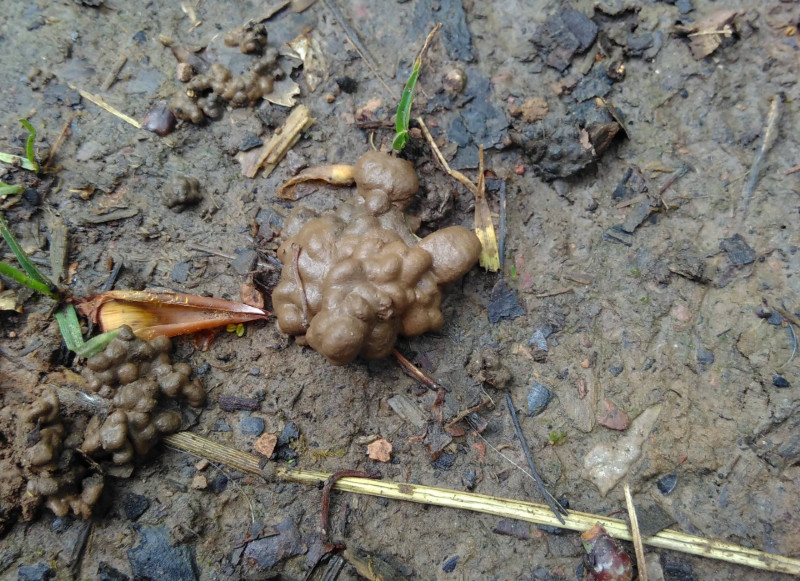
Darwin spent a lot of time with earthworms, and his experiments showed that they move a huge amount of soil around. He estimated that over 16,000kg of soil was brought to the surface by earthworms in one acre in one year.
9. A fascinating – and efficient – sex life
Earthworm sex is pretty mind-blowing.
We’ve talked about the saddle (clitellum). It’s only adult earthworms who have the saddle because its purpose is for reproduction. Earthworms are hermaphrodites, so when two worms mate they both get their eggs fertilised. How do they do this? There’s a reproductive organ on the saddle which makes mucus to hold the two lovemaking worms together during mating, while each worm releases sperm.

Here’s the really cool bit. A mucus sheath forms around the saddle and then moves up towards the worm’s head, picking up eggs and sperm along the way. It slides off and forms a cocoon, which is where fertilisation happens. These little lemon-shaped egg sacs stay in the soil until the conditions are right for them to hatch into tiny worms, often in the spring.

10. Worm charming is a competitive sport
Have you ever seen a seagull doing a dance on a lawn? She’s trying to make the worms think it’s raining so they come above ground (where they find out it’s not raining, and curse their gullible nature as they get gobbled up by a seagull).
Well, humans do this too (with less gobbling) in the annual Worm Charming Championships which take place in Willaston, Cheshire – although sadly not recently due to Covid. Teams compete to coax as many earthworms out of the ground as they can through stamping, drumming and playing music.
11. They risk getting stranded – for the good of the species
OK, I know I said top ten – but there is just so much to love and learn about worms! So, finally, let’s answer that question: why would an earthworm leave the security of a mulchy garden to risk life on an inhospitable pavement?
Vampire-like, they don’t do well in sunlight, as you’ll know if you’ve ever seen the sad sight of a dried-up earthworm who didn’t make it across the pavement in time. Earthworms love wet, dark conditions and are very sensitive to light. Although blind, they can tell if it’s daylight by sticking their head above ground.
Earthworms might come above ground at night time to mate and find food. They are happiest surfacing during rain as they will avoid drying out and be less likely to run into something that wants to eat them. But this is when shallow-burrowing worms sometimes get stranded on pavements. This is thought to be because they are heading off overland to find a new patch of earth with another population of earthworms where they can spread their genes around, improving diversity. My pavement earthworm’s brave mission might have been all about trying to broaden the genetic pool, it seems.
Thanks for joining me on this journey into the wormworld. We haven’t even mentioned that worms have a kind of brain, that they are super sensitive to touch and chemical changes, breathe through their skin and are older than dinosaurs! Maybe we’ll come back to the wonderful worm and celebrate more of their fascinating features when we get to World Worm Day on 12 October 2021.
Find out more
- The Earthworm Society of Britain: www.earthwormsoc.org.uk
- Read about the Discovering Earthworms course: www.earthwormsoc.org.uk/DiscoveringEarthwormsBlog
- Learn more about Darwin’s Earthworms in this FSC Biolinks presentation with Kerry Calloway:
 small world
I loved this! Great alliterative title, too! Very fascinating. Well done, Nicola!
LikeLiked by 1 person